Case Study
Hilai Harbour × Vyin Voicebot AI Voice Reservation Assistant
Hilai Harbour Adopts an AI Voice Reservation Assistant, Lifting Call Answer Rate from 50% to 80%
87% of AI-handled calls are completed without human assistance, so more customer needs get answered in real time despite peak-hour call volume and staff shortages.
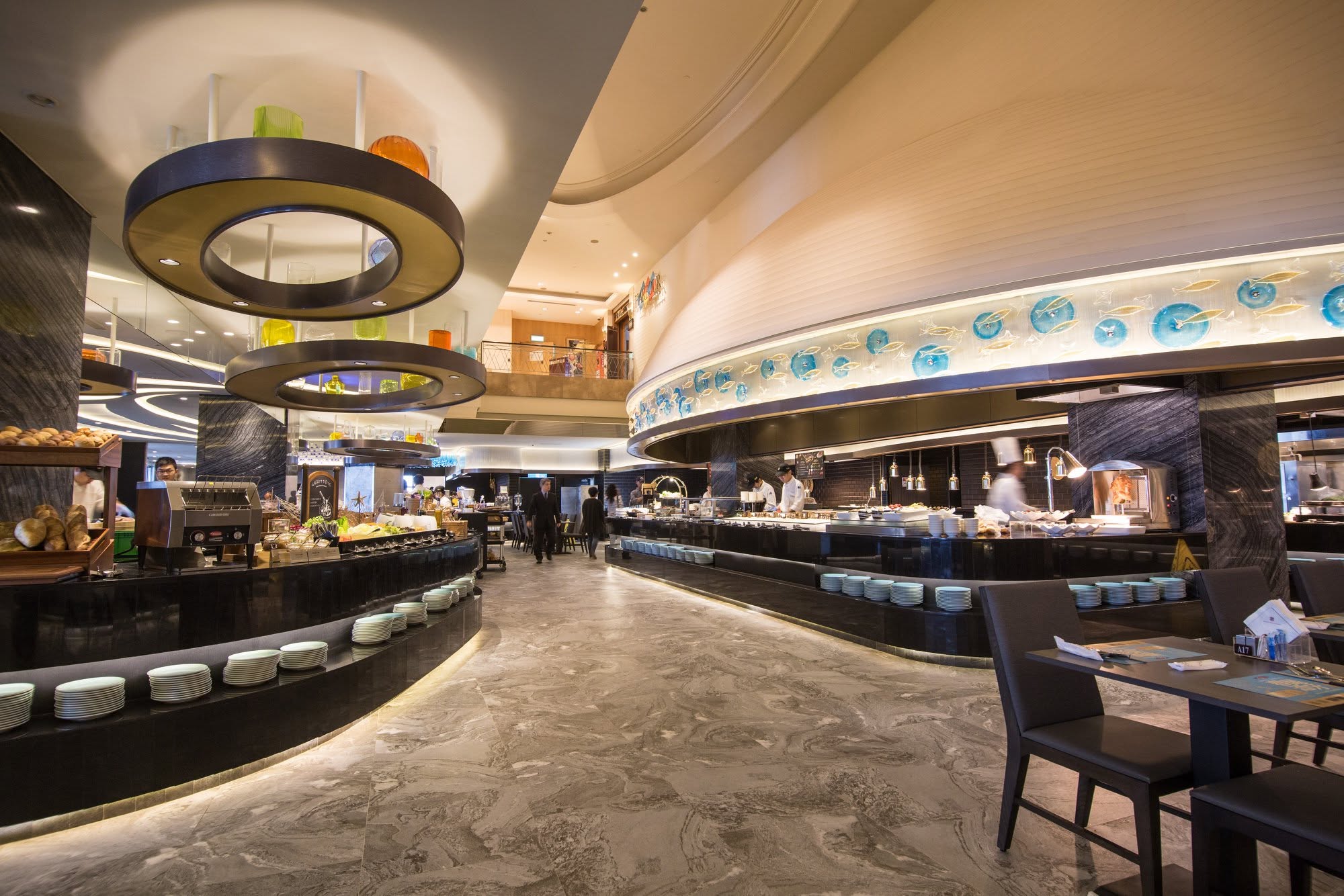
- Client
- Hilai Foods Group
- Brand
- Hilai Harbour
- Industry
- Restaurant chain / buffet
- Solution
- Vyin Voicebot AI voice reservation assistant
- Use cases
- Phone reservations, reservation changes, FAQs, handoff to staff
Client Background
With reservation demand high, the phone remains a key service channel
Hilai Foods is one of Taiwan's largest restaurant groups, with brands spanning buffets, Chinese cuisine, banquets, and fine dining. Among them, Hilai Harbour has long faced heavy and highly concentrated reservation demand.
Even with an online booking system in place, the phone is still the channel many customers prefer. Beyond new reservations, customers call to check availability, change or cancel bookings, and ask about pricing, promotions, opening hours, dining rules, directions, and parking.
For a restaurant floor, the phone is not just a booking channel. It is a service entry point that directly shapes the customer experience and revenue opportunities.
Challenge
1.3 million calls a year, and staff could only answer about half
Across its seven Hilai Harbour locations in Taiwan, phone reservations reached 1.3 million calls a year. Even with every line and every available staff member deployed, the actual answer rate was only around 50%. For Hilai, the problem was not just call volume, but that demand peaked exactly when staff were stretched thinnest.
Peak-hour calls exceed what staff can handle in real time
During popular meal periods, holidays, and booking-release windows, large volumes of calls flood in within a short time. Constrained by phone lines and floor schedules, even adding more staff could not fully absorb these sudden surges.
「Two out of every five customer complaints were about not being able to get through on the phone.」
Phone service and floor service keep competing for the same people
Frontline staff answer the phone while also greeting guests, serving tables, and handling whatever comes up on the floor.
As reservations, changes, and common questions pour in over the phone, staff are constantly switching between callers and the guests in front of them. This adds to their workload and squeezes the time available for service that genuinely needs a human touch.
「Every buffet had to assign four people to answer phones, and even then the answer rate was only 50%. That is why we brought in the AI voice assistant.」
Phone reservations are complex, yet no step can compromise the customer experience
A single reservation call shapes how customers feel about the brand at every step: from ringing in and waiting, to the voice that answers, to whether the system can follow a customer's shifting needs and complete the booking or later changes. The flow cannot be rigid. It has to adapt to the conversation and hand off to a person when needed.
Solution
Humans first, AI follows through: bringing AI into the actual service flow
Hilai Harbour adopted the Vyin Voicebot AI voice reservation assistant in a "humans first, AI follows through" model. When floor staff are free to answer, they still take the call. When the floor is busy or lines are occupied, the AI takes over.
Vyin Voicebot is built on reusable capabilities for voice interaction, conversation understanding, knowledge, and task handling. These are then configured and integrated around Hilai's actual service flows, reservation rules, existing systems, and brand requirements, balancing scalable deployment with the flexibility a large enterprise needs.
Human-like AI conversation: natural responses, flexible flows, and the brand's own voice
Real customer calls in a restaurant rarely follow a fixed script. Instead of forcing callers through a rigid voice menu, Vyin Voicebot keeps track of context and handles the extra details, changes of mind, and topic switches that happen mid-call, so customers never have to start over to suit the system.
On the voice side, Vyin AI focuses on connecting understanding, response, and the next turn of conversation without lag, keeping a natural rhythm close to a human phone agent and cutting out awkward pauses.
For a brand that prides itself on service, what the AI says matters, and so does how it says it. After evaluating several voice options together, the two teams chose to build a custom voice based on a Hilai service staff member, so the AI keeps the warmth and familiarity of the brand even while handling large call volumes.
Integrating existing telephony and reservation systems so the AI completes tasks, not just answers questions
An AI voice service that truly works in production cannot stop at Q&A.
The Vyin AI team first mapped Hilai's common call types, reservation conditions, FAQs, edge cases, and the division of labor with human staff, then turned those real service flows into conversation logic the AI can execute. On that foundation, Vyin Voicebot was integrated with Hilai's existing telephony and reservation management systems, so the AI can pull live availability during a call and check, create, change, or cancel reservations rather than only answering questions.
Customers do not need to download a new app or change the habit of picking up the phone. The service simply gets done.
At the same time, the system enforces clear service boundaries based on Hilai's actual operating rules. Large groups, non-standard requests, missing information, or situations unsuitable for AI judgment are handed to a human.
A service management console that makes every AI call traceable
After the AI completes a call on its own, the business still needs visibility into how each one was handled. Vyin AI therefore built a service management console where frontline staff can review:
- Every call and its conversation log
- The original call recording
- How the AI handled it
- Follow-up status
When a human needs to step in, staff can quickly see the prior interaction and current status, then pick up where the AI left off. For a large enterprise, this turns the AI from an auto-answering tool into a manageable, traceable, and continuously improvable part of the service chain.
Results
Nearly 150,000 calls served, with the answer rate up from 50% to 80%
After deploying Vyin Voicebot, Hilai Harbour expanded a service capacity that had previously been capped by staffing and phone lines.
Call answer rate: 50% → 80%
With the AI voice assistant in place, Hilai Harbour's call answer rate rose from about 50% to 80%, reducing service lost to busy lines during peak hours.
AI self-completion rate: 87%
87% of calls routed to the AI are completed by Vyin Voicebot on its own, so high volumes of standard reservations and inquiries no longer need to be passed back to staff.
Total calls served: nearly 150,000
Since going live in November 2025, the AI has served nearly 150,000 calls in seven months and is now part of daily operations, continuously handling real customer needs. Beyond service efficiency, Hilai estimates that higher answer rates and shorter waits will lift foot traffic and reservation conversion, driving a potential revenue increase of around 10%.
For Hilai, the AI voice assistant changed more than the number of calls answered.
What matters most is reconnecting the service demand that staffing limits once left unanswered: letting AI take on the service that can scale, so people can return to where people are needed most.
Does your service floor also have more calls than it can catch?
The Vyin Voicebot AI voice assistant serves restaurants, hotels, hospitality, and chain service businesses. It integrates with your existing processes, knowledge, and systems to handle phone bookings, changes, FAQs, and handoff to staff.
Learn about Vyin Voicebot